Source Pin Loaded Dip Station for Home, Gym, and Park Use
Find 30 pin loaded dip station options for home gyms, commercial fitness centers, and outdoor parks. Compare steel construction, CE and RoHS certifications, and manual power sources to select the right equipment for your facility; compare the available evidence and request quotations based on your requirements.
Key considerations
Products List






Comprehensive Sourcing Guide
Pin Loaded Dip Station Sourcing Guide
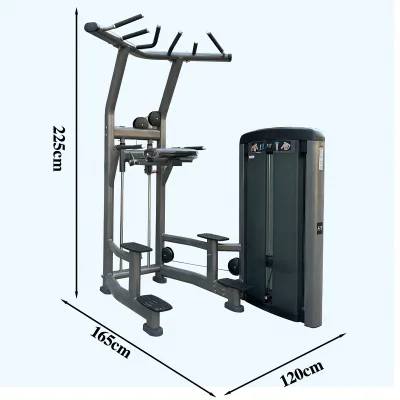
Pin loaded dip stations are specialized fitness apparatuses designed to provide adjustable resistance for upper body strengthening, particularly targeting the triceps, chest, and shoulders. These units typically integrate a weight stack mechanism where users select resistance levels via a pin, allowing for quick changes between sets without manual plate loading. The observed product data indicates that such equipment is frequently categorized for use in gymnasiums, community centers, and parks, suggesting a design philosophy centered on durability and high-traffic public usage.
When evaluating listings, buyers must distinguish between manual resistance units and those with integrated weight stacks, as the supplied facts highlight a "Manual" power source alongside "Wireless" attributes for other product types. This distinction is critical because a true pin-loaded system relies on gravity and a stack, whereas manual units may require external weights or different resistance mechanisms. Procurement teams should verify that the specific model, such as those with model numbers like MS-FM1619, explicitly supports the pin-loading mechanism required for the intended training protocol.
Product Scope and Observed Listing Signals
The market for dip stations presents a wide variance in specifications, with observed price ranges extending from nominal entry-level costs to substantial industrial-grade investments. Listings often display diverse attributes, including "Unfolded" configurations and specific dimensions like 210 x 70 x 105 cm, which define the footprint required for installation. Buyers must carefully cross-reference these physical dimensions against their facility's available space, as the package size of 134 x 64 x 13 cm indicates significant shipping volume that impacts logistics planning and storage requirements.
Product listings also reveal a mix of intended applications, ranging from home use to large-scale gymnasium and community installations. The presence of "Adult" and "Unisex" age and gender attributes confirms the general target demographic, yet the specific "Exercise Part" of "Arm" highlights the primary functional focus of these units. Sourcing teams should scrutinize the "Customization" availability, as some suppliers offer tailored solutions for commercial environments, while others provide standard configurations suitable for general fitness centers.
Technical Specifications to Verify
Technical due diligence requires a rigorous verification of structural integrity and operational mechanics, particularly regarding the weight stack and pin engagement system. The supplied data mentions "Steel" as a primary material, which is essential for withstanding the high forces generated during dip exercises. Buyers must confirm the specific grade of steel and the thickness of the frame, as well as the "Protection" features that ensure the equipment remains durable under repeated heavy use. The "Structure" being described as an "Amplifier Separated Type" in some contexts suggests a need to clarify if this applies to the resistance mechanism or a separate control unit.
Environmental and operational limits are equally critical for long-term reliability, especially for equipment destined for outdoor or varied indoor climates. Observed attributes indicate an operating altitude of up to 2000 meters and an ambient temperature range of -35°C to +40°C, which are vital for facilities in extreme environments. Procurement teams must ensure that the specific unit selected, such as those with model numbers like DFW-12/24, meets these environmental thresholds to prevent mechanical failure or material degradation over time.
Compliance and Safety Documentation
Safety compliance is non-negotiable for fitness equipment, and buyers must demand comprehensive certification documentation before finalizing any purchase. The observed product data lists multiple certifications including CE, RoHS, and ISO, which are standard indicators of adherence to international safety and environmental standards. However, the presence of "CCC" certification in some listings points to specific regulatory requirements for the Chinese market, necessitating that importers verify if these certifications are valid and recognized in their destination country.
Beyond general certifications, specific safety standards related to the mechanical operation of the dip station must be reviewed. The "Standard" field in some records references dimensions like 134 x 64 x 13 cm, which may be a mislabeling of packaging rather than a safety standard, requiring buyers to seek explicit references to mechanical safety norms. Additionally, the "Wiring" attributes mentioning "Null Line and Live Line" suggest electrical components in some models, mandating a review of electrical safety compliance to ensure the equipment is safe for public use.
Cost Drivers and Commercial Terms
The total cost of ownership for pin loaded dip stations is influenced by several factors, including material quality, customization options, and shipping logistics. The observed MOQ range of 1 to 5000 units allows for flexibility, but bulk orders often unlock better pricing tiers. Buyers should analyze the "N.W/G.W" of 23 Kg/25 Kg to calculate accurate freight costs, as the weight difference between net and gross weight impacts shipping charges and handling fees significantly.
Commercial terms also extend to packaging and delivery timelines, which are critical for project scheduling. The "Package" details, such as "1 PCS/CTN" or "Polybag&Cartons," indicate the level of protection provided during transit, which can affect the risk of damage and subsequent replacement costs. Furthermore, the "Customization" availability suggests that tailored orders may incur additional lead times and costs, requiring buyers to balance the need for specific features against budget constraints and delivery deadlines.
Supplier Qualification and Quality Control
Supplier qualification involves a thorough assessment of the manufacturer's production capabilities and quality assurance processes. The origin data points to "China" and specifically "Jiangsu Changzhou," a region known for manufacturing fitness equipment. Buyers should verify the supplier's track record in producing units with the specific "Model No." and "Brand Name" observed, ensuring they have a history of consistent quality and adherence to the stated specifications.
Quality control protocols must be established to ensure that every unit meets the required performance and safety standards. The "Feature" of being "Mechanical" and the "Kind" of "Single-pole on-off Switch" in related components highlight the need for rigorous testing of moving parts and electrical connections. Procurement teams should request third-party test reports or on-site audits to confirm that the "Protection" and "Durable" claims are substantiated by actual performance data under load.
Long-Term Procurement Checks
Long-term procurement success depends on establishing a robust maintenance and support framework for the installed equipment. Buyers should verify the availability of spare parts, such as pins, cables, and weight plates, to minimize downtime during the equipment's lifecycle. The "Information content" listed as "Data" suggests that some units may have digital interfaces or tracking capabilities, requiring ongoing software support and firmware updates to remain functional and secure.
Finally, periodic performance reviews are essential to ensure the equipment continues to meet user needs and safety standards over time. The "Usage" attributes covering "Telephone, Mobile phone, Server, Computer, Laptop" in some listings indicate a potential confusion in product categorization, necessitating a clear definition of the actual intended use for the dip station. Regular inspections should be scheduled to check for wear on the steel frame and the integrity of the pin-loading mechanism, ensuring the equipment remains safe for continuous public or commercial use.
FAQs
What is the typical product size for a pin loaded dip station?
The standard product size is 210 x 70 x 105 cm. This unfolded dimension provides ample space for safe arm exercises. The package size is significantly smaller at 134 x 64 x 13 cm for efficient shipping. Buyers should verify these measurements against their available floor space before ordering to ensure proper fit.
Which certifications are available for these dip stations?
Available certifications include CE, RoHS, CCC, and ISO. These standards ensure compliance with international safety and environmental regulations. Buyers can select models based on specific regional requirements. The presence of multiple certifications indicates rigorous quality control and manufacturing standards for durable gym equipment.
Can the dip station be customized for specific needs?
Yes, customization is available for these units. Buyers can request specific modifications to meet unique facility requirements. This flexibility allows for tailored solutions in various settings. Custom options may affect lead times and pricing, so early consultation with suppliers is recommended to align specifications with project goals.
What is the net weight of the dip station?
The net weight is 23 kg, with a gross weight of 25 kg. This weight ensures stability during intense arm exercises. The steel construction contributes to this durability. Buyers should consider this weight for installation logistics and floor load capacity. The compact package size aids in handling despite the sturdy build.
Where are these dip stations manufactured?
These products originate from China, specifically Jiangsu Changzhou. This region is known for manufacturing quality fitness equipment. Buyers can expect established supply chains from this location. Origin details help in calculating shipping costs and lead times. Sourcing from this area often provides competitive pricing for steel-based gym apparatus.
What is the minimum order quantity for these units?
The minimum order quantity ranges from 1 to 5000 pieces. This wide range accommodates both small gyms and large commercial projects. Buyers can order single units for testing or bulk quantities for distribution. MOQ flexibility allows for scalable procurement strategies. Suppliers typically adjust terms based on the volume requested.